

Table of Contents
Introduction
Historic West Hollywood buildings are not only architectural treasures but also active spaces for living and business. As demand grows for energy-efficient HVAC retrofits that respect the unique character of these properties, building owners and managers face the challenge of balancing preservation standards with modern performance. Solutions today offer significant benefits–from cost savings and improved tenant comfort to meeting ambitious regulatory and energy goals. Upgrading HVAC isn’t simply a technical exercise; it’s a strategic investment that ensures iconic buildings remain viable and comfortable for decades to come.
The Need for Specialized HVAC Retrofits
Retrofitting historic commercial buildings requires more than simply swapping out old equipment. These projects necessitate bespoke solutions tailored to unique layouts, vintage construction, and preservation mandates. Unlike modern buildings, older properties often present structural and aesthetic constraints that standard HVAC upgrades can’t address. To respect historic fabric and meet today’s expectations, a thoughtful, collaborative approach is crucial.
Balancing Preservation and Energy Efficiency
Achieving both energy savings and compliance with preservation standards means working within limitations such as restricted duct paths, antique finishes, and original facades. Successful projects use non-invasive HVAC retrofit methods, like smart ductless mini-splits or custom-designed air distribution systems, to minimize physical changes while maximizing performance. The result is an upgrade that secures long-term efficiency without sacrificing historic value.
Overview of Retrofit Benefits
Modern retrofits deliver impressive outcomes:
- Boosted energy efficiency–reducing utility costs up to 40%
- Enhanced tenant comfort improvements from better air quality and consistent temperatures
- Compliance with local and state codes, unlocking valuable incentives
- Lower maintenance needs and longer system lifespan
These upgrades pave the way for both financial and operational sustainability in West Hollywood’s prized historic assets.
Understanding Historic Building HVAC Challenges
Upgrading HVAC systems in historic West Hollywood structures means navigating an intricate set of practical and regulatory hurdles. Owners must address structural limitations, inefficiencies, and preservation requirements–all while seeking a return on investment that justifies the effort.
Structural and Preservation Constraints
Historic brick walls, ornamental plaster, and original windows often dictate what’s possible. Installing new HVAC in such environments can put architectural features at risk if not handled with precision. Specialists in historic HVAC retrofits utilize:
- Compact equipment (like ductless mini-splits)
- Flexible, custom ductwork designed for minimal disruption
- Clever placements (e.g., exterior-mounted condensing units)
These non-invasive HVAC retrofit methods dramatically reduce the impact on the building’s original appearance and structure.
Energy Efficiency Barriers
Older HVAC systems are notorious for inefficiency–leaky ductwork, obsolete controls, and inadequate insulation drive up energy use. Limited space and rigid layouts can make installing high-performance units tricky. Solutions such as variable refrigerant flow (VRF systems) or energy recovery ventilators have proven their worth by accommodating old buildings’ quirks while sharply curbing consumption. For example, duct sealing energy savings can reclaim up to 30% of lost energy in poorly sealed systems.
Regulatory Compliance in West Hollywood
West Hollywood enforces rigorous preservation standards through its Cultural Heritage Commission, requiring designated changes to maintain historical character. Any HVAC work often needs:
- Detailed project documentation submitted for approval
- Demonstrations that retrofits avoid irreversible changes
- Alignment with city energy mandates and incentive program criteria
Collaborating with contractors well-versed in both preservation and HVAC code ensures projects move smoothly, allowing access to local incentives for energy-efficient HVAC retrofits West Hollywood and city rebates.
Effective Retrofit Solutions
Modern HVAC retrofits for historic properties employ technology that’s as flexible as it is efficient. Property owners can blend cutting-edge solutions with unobtrusive installations to meet both energy and preservation targets.
Advanced HVAC Technologies
Key innovations include:
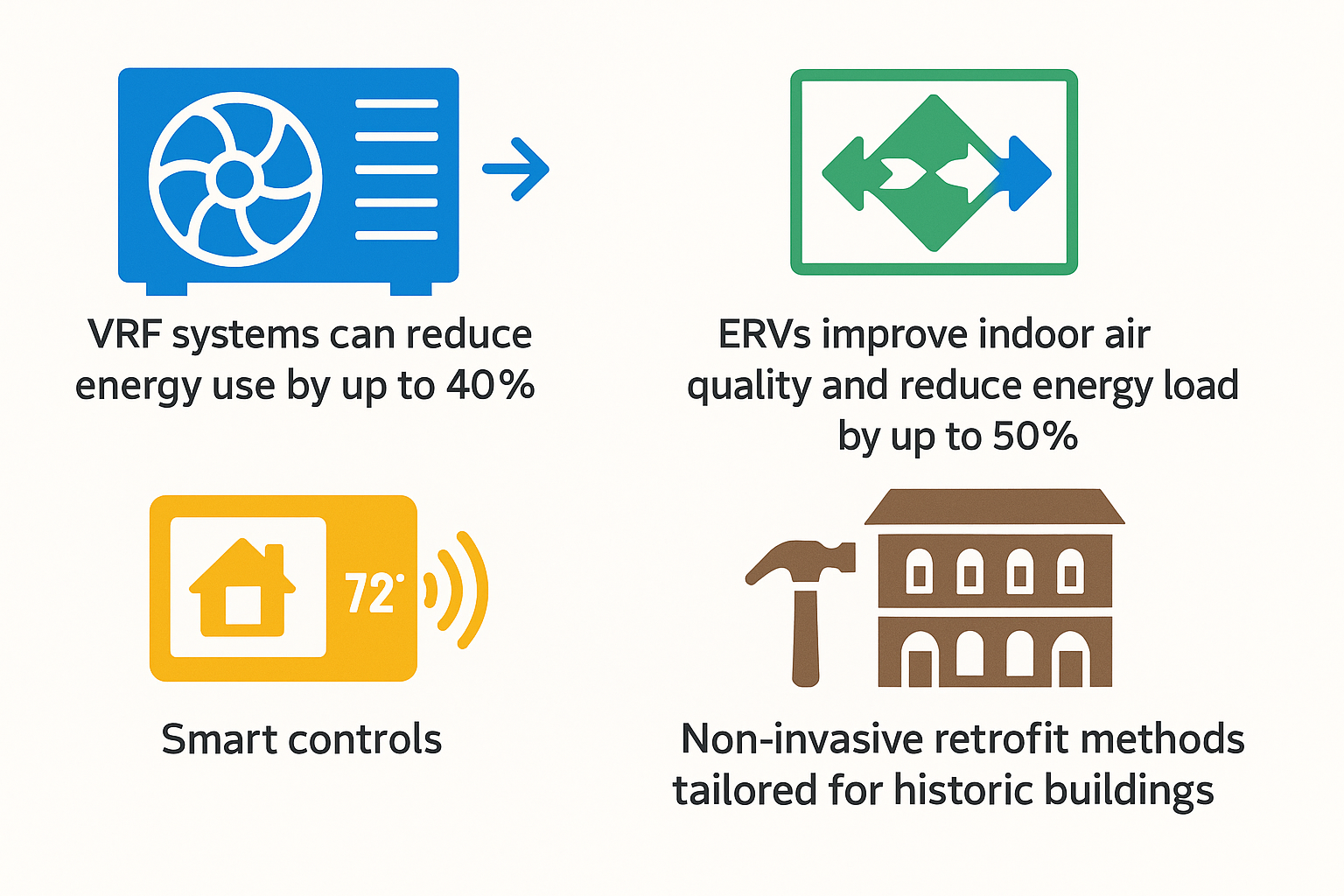
- VRF systems, which allow precise zone control and use compact refrigerant lines that are easy to integrate
- High-efficiency energy recovery ventilators (ERVs) that recycle indoor air and minimize energy waste
- Upgraded refrigerants and variable-speed drives, offering performance boosts while being environmentally responsible
Studies show that VRF systems can reduce energy use by up to 40% in retrofitted buildings, while ERVs can cut HVAC energy load by up to 50%–all with less intrusive installation.
Non-Invasive and Reversible Methods
To preserve historic aesthetics, the use of non-invasive HVAC retrofit methods such as ductless mini-split systems, slim-duct systems, and smart wall-mounted units is increasing. Exterior units can be concealed, wiring hidden, and all interventions designed to be fully reversible for future preservation.
This means most upgrades can be removed without permanent effect on the building, helping maintain its landmark status.
Passive and Smart Controls Integration
Maximizing comfort and efficiency often means adopting both passive and active innovations:
- High-performance windows and shading
- Automated smart HVAC controls for real-time system optimization
- Building automation HVAC retrofits and smart thermostats that seamlessly integrate with existing infrastructure
The integration of building automation HVAC retrofits also enables remote monitoring, predictive maintenance, and fine-tuned environmental control.
Phased Retrofit Approaches
Implementing retrofits in stages–starting with high-impact items like controls and duct sealing, then adding larger equipment upgrades as budgets allow–helps manage cost and building disruption. These phased HVAC retrofit benefits include easier budgeting and less tenant inconvenience. Owners get to see performance improvements and cost reductions quickly, with ongoing opportunities for additional upgrades.
Financial Incentives and Cost Management
Financial planning is central to successful retrofits. Fortunately, a variety of robust city, state, and federal programs reduce costs and reward efficiency, making upgrades more attainable and lucrative.
Local and State Rebates
Property owners in West Hollywood can access energy rebates West Hollywood and other local incentives, often administered by utilities or the city itself. These typically:
- Provide cash back for qualifying high-efficiency equipment
- Offer bonus incentives for projects meeting preservation standards
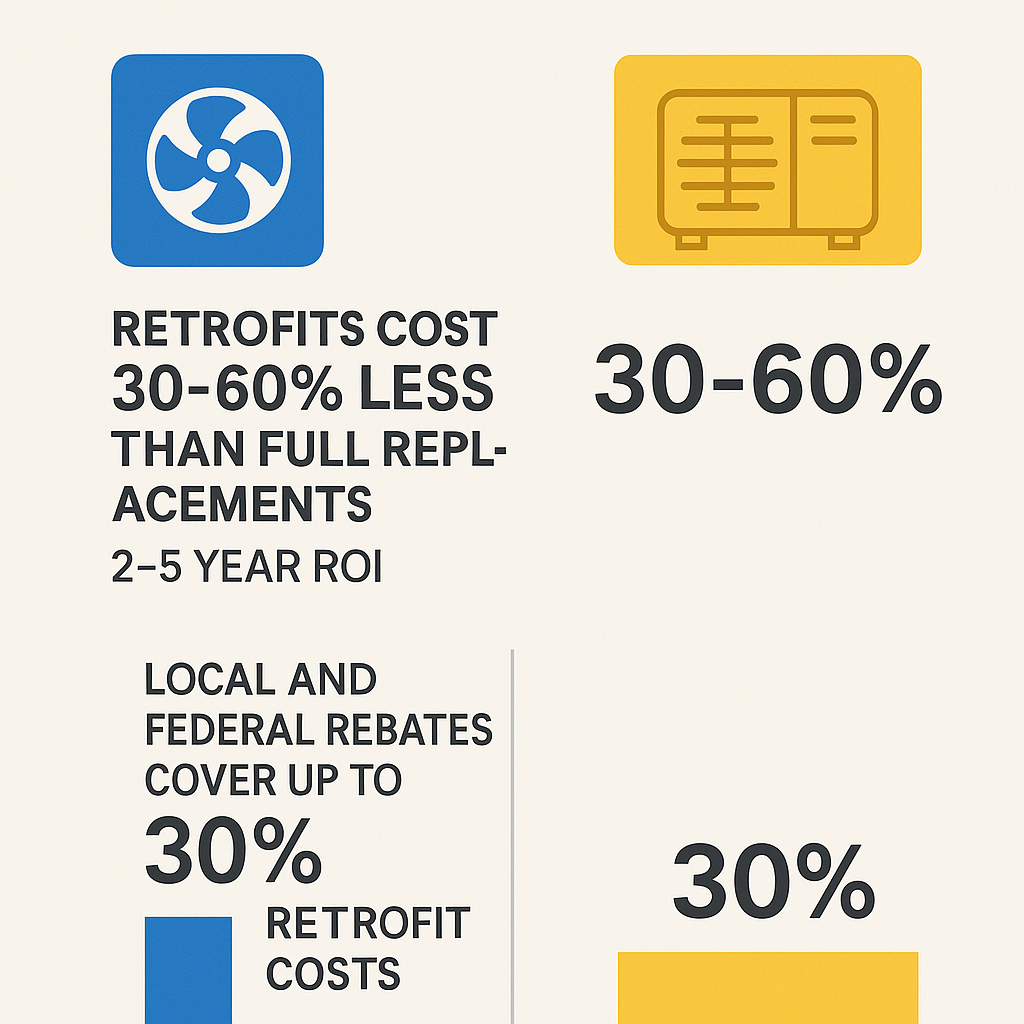
- Reduce upfront costs by as much as 30%
Applying for local incentives for energy-efficient HVAC retrofits West Hollywood is a critical step for maximizing ROI.
Federal Grants and Tax Credits
Federal support–such as federal tax credits and grants for sustainable upgrades–can offset investment by thousands, particularly when projects document substantial energy savings and meet mandated efficiency thresholds. These programs are updated yearly, so owners should check the latest eligibility rules and savings projections.
Cost vs. Replacement Analysis
Data shows that commercial HVAC system retrofits in Los Angeles cost 30-60% less than full replacement and typically deliver ROI within 2-5 years. Bonus: maintenance and operational costs decrease post-retrofit.
Energy rebate optimized commercial HVAC replacement Los Angeles ensures projects meet technical requirements for all available incentives, aligning both cost and compliance outcomes for historic buildings.
Impact on Tenant Comfort and Building Preservation
Energy-efficient retrofits fundamentally reshape tenant experience and building longevity. By combining modern comfort with respect for heritage, owners deliver superior spaces for both living and working.
Improving Indoor Air Quality and Thermal Comfort
Replacing old units with innovative systems directly leads to tenant comfort improvements: better air filtration, stable temperatures, and reduced noise. Energy-efficient HVAC retrofits uphold indoor air quality, boost occupant productivity, and cut down on complaints–creating happier, more comfortable tenants.
Maintaining Historic Aesthetics
Skilled contractors use methods that allow all upgrades to blend in with architectural details, ensuring that historic building preservation isn’t compromised. For instance, mini-split units and remote-coil systems can be hidden or painted to match interior aesthetics, preserving original finish work.
Success Stories from West Hollywood
Several historic commercial buildings in the area have won accolades after implementing energy upgrades that respected both form and function. Projects featuring phased HVAC retrofit benefits have reported reduced energy bills, improved comfort, and even higher property valuations–demonstrating the tangible impacts of aligned preservation and efficiency.
Choosing the Right Contractor
Selecting a contractor who understands the nuances of energy-efficient HVAC upgrades for heritage buildings is essential for success.
Specialists in Historic HVAC Retrofits
Seek out specialists in historic HVAC retrofits–firms that possess:
- Hands-on experience with protected properties
- Clear understanding of preservation rules
- Track record delivering custom solutions without damaging original spaces
These experts provide tailored, reliable service.
Evaluating Expertise and Compliance
Look for credentials such as:
- Licensure and active insurance
- Proven knowledge of energy-efficient HVAC technologies 2024 and preservation standards
- Facility with city permitting and regulatory compliance in West Hollywood
Careful vetting ensures a project that stands up to scrutiny and achieves the desired results.
Leveraging Local Experience
Local firms familiar with West Hollywood’s unique architectural and regulatory landscape are best equipped to anticipate obstacles and maximize energy rebates West Hollywood opportunities. Their local reputation and relationships can streamline approval and project delivery.
Conclusion
Upgrading to energy-efficient HVAC retrofits is more than a necessity for historic West Hollywood buildings–it’s a strategic way to protect property value, enhance tenant comfort, and assure compliance with modern efficiency goals. The key is working with a skilled HVAC Contractor West Hollywood specializing in heritage retrofits and leveraging the full spectrum of rebates and incentives.
Contact a specialist HVAC contractor in West Hollywood today to start your energy-efficient retrofit and preserve your historic building’s legacy.
Resources
Challenges and Solutions for HVAC Systems in Historic Commercial Buildings – Evolution Mechanical
Retrofitting Older Buildings – Sam Mechanical
HVAC Retrofit – U.S. Department of Energy
Top HVAC Retrofit Solutions for Energy and Cost Savings | Consulting – Specifying Engineer
Identifying Resilient, Sustainable Cooling Strategies for Los Angeles
Energy-Efficient HVAC Technologies for Sustainable Buildings
Review of Energy-Efficient HVAC Technologies for Sustainable Buildings
AC Repair Near Me – Crenshaw Heating & Air Conditioning
Smart HVAC Solutions and Retrofit Strategies – CustomGPT
HVAC Contractors West Hollywood Heating And Air Contractors West Hollywood CA